Navigating Air Travel with Your Travel CPAP: Essential Tips for Better Sleep
Imagine booking that dream vacation, only to worry about your sleep apnea treatment getting in the way. For millions who rely on CPAP machines, travel can mean restless nights and health risks. This guide breaks down everything you need to know about using a travel CPAP on planes and beyond. You’ll learn about rules, gear choices, and fixes to keep your therapy on track. No more letting sleep apnea stop your adventures.
Section 1: Understanding Airline Regulations and FAA Compliance for CPAP Devices
Airlines treat CPAP machines as key medical tools. You have rights under laws like the Air Carrier Access Act in the US. This means carriers must let you bring your device without extra fees or hassle.
CPAP as Essential Medical Equipment: Your Rights as a Passenger
The Air Carrier Access Act covers CPAP users on flights. It says your machine counts as vital gear for health. Airlines can’t charge you to carry it or make you check it if you need it during the trip.
You often need a doctor’s note to prove this. The letter should list your condition, the machine’s use, and contact info for your doctor. Keep it handy at the airport. This simple step avoids delays and questions from staff.
Many travelers skip this and face issues. Don’t risk it—get the note before you pack. It protects your right to use your travel CPAP without stress.
Battery Power and In-Flight Use Policies
Power keeps your CPAP running mid-flight. Most new models work with plane outlets or batteries. Check if yours fits under the seat or in the armrest.
During takeoff and landing, stow the machine unless it’s a must for your health. Tell the crew ahead of time. They can note your needs in their system.
Battery life matters for long hauls. Aim for one that lasts 8 hours or more on a charge. This covers red-eye flights without worry.
Checked vs. Carry-On Luggage: Where to Pack Your Machine
Always carry your CPAP in your bag, not checked luggage. Bags get lost or damaged often. Your therapy can’t wait for baggage claim.
Carry-on rules let medical devices go through security with ease. Measure your machine to fit airline limits, usually 22 by 14 by 9 inches. If it’s bigger, ask for a pass on size.
Use a padded travel case for protection. Some airlines allow an extra bag for medical items. This keeps your CPAP safe from rough handling.
Section 2: Selecting the Right Travel CPAP Equipment
Picking the best gear makes travel smooth. Look for models built for the road. They save space and weight in your luggage.
Compact vs. Travel-Specific Machines: Feature Comparison
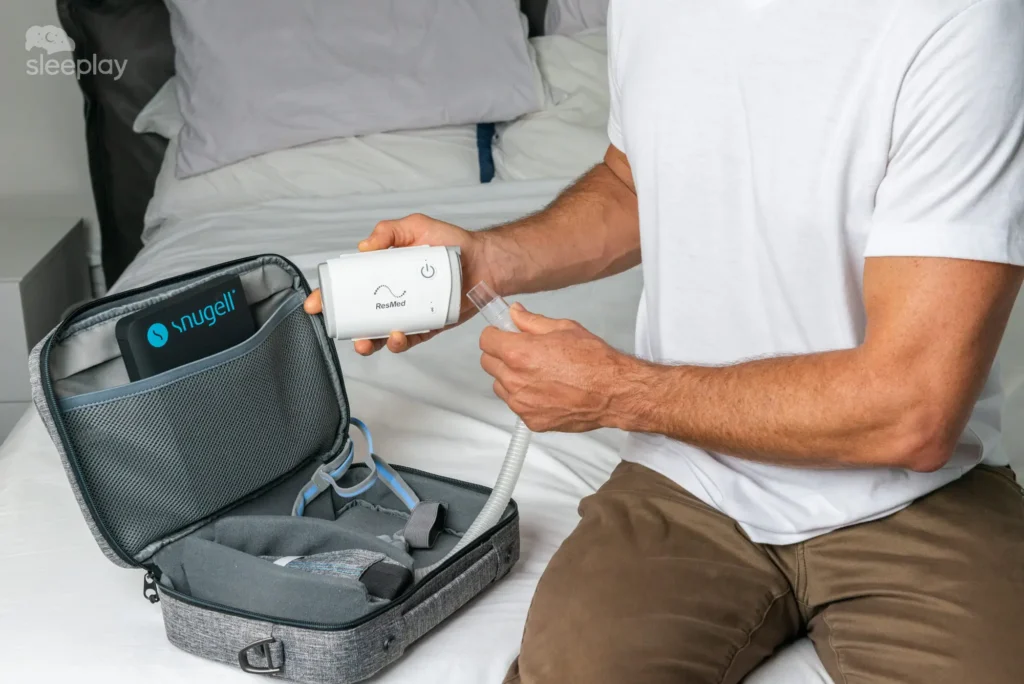
Full-size CPAPs with built-in humidifiers work at home. But they weigh a lot for trips. Travel versions like the Z2 Auto or AirMini cut that down to under 2 pounds.
The Z2 Auto packs small and runs quiet. It auto-adjusts pressure for your needs. Compare it to bulkier ones—travel models often skip extras to stay light.
Lightweight CPAP options shine for backpackers. Check 2024 reviews for top picks. They balance power with portability every time.
The Humidifier Dilemma: To Bring It or Not?
Humidifiers add moisture to fight dry air. Yet they add weight and eat battery fast. Skip it on short trips to keep things simple.
If comfort wins, pack a small one. Use distilled water packs instead of a full tank. This cuts bulk without losing benefits.
Room humidity varies by spot. In dry hotels, a basic humidifier helps. Weigh the pros against the extra hassle on your journey.
Essential Travel Accessories Checklist
Pack smart to avoid surprises. Here’s what you need:
- Power adapters for US, EU, and UK plugs.
- Slim tubing that folds easy.
- FAA-approved battery packs under 160Wh.
- Distilled water pouches for humidifiers.
- Cleaning wipes for quick freshens.
- Extra mask cushions in case of wear.
These items fit in a small bag. They ensure your CPAP machine travel setup stays reliable. Test everything before you leave.
Section 3: Powering Your Device Abroad: Adapters, Converters, and Batteries
Electricity differs around the world. Your travel CPAP must handle it. Plan ahead to plug in without issues.
Navigating International Voltage Requirements (110V vs. 220V)
US outlets run at 110 volts. Europe uses 220. Most modern CPAP power bricks switch auto between them.
Just grab plug adapters for the shape. Skip voltage converters—they can overheat your gear. Always check your manual for dual-voltage rating.
If yours isn’t dual, buy a converter rated for medical devices. Test it at home first. This keeps your machine safe overseas.
The Importance of Portable Battery Solutions
Batteries free you from outlets. FAA rules say carry them in your bag, not checked. Limit to 100Wh per battery, or 160Wh with approval.
Dedicated CPAP batteries last nights. Power banks work too if they output the right voltage. Charge them fully before flights.
Save power by turning off heat features. This stretches one charge over 10 hours easy. It’s a game-saver for remote spots.
Sourcing Water in Remote Locations
Distilled water cleans your humidifier best. Buy it at airports or drug stores in big cities. Avoid tap—minerals clog the system.
In small towns, ask for purified bottled water. Let it sit to settle bits. Or boil tap water and cool it if your guide allows.
Check your machine’s rules on water types. Some handle it fine with care. Stock up where you can to stay on track.
Section 4: Maintaining Therapy Compliance While Traveling
Stick to your routine even on the go. Clean gear and adjust for changes. This keeps sleep apnea under control.
Cleaning and Hygiene on the Road
Dirt builds up fast in new places. Use no-rinse wipes when sinks are scarce. They kill germs without water.
For deeper cleans, travel soaps work in hotel rooms. Rinse and dry parts fully. Mold loves damp spots, so air them out.
Do this daily to avoid smells or breaks. A clean CPAP means better therapy every night.
Dealing with Altitude Changes (Flying and High Elevations)
Air pressure drops at high spots. This can tweak your CPAP settings. Auto machines often fix it themselves.
Talk to your doctor about manual changes. High mountains might need a bump in pressure. Test adjustments before big trips.
Flights mimic this shift. Stay hydrated to ease effects. Your body adapts, but your machine helps most.
Troubleshooting Common Travel-Related CPAP Issues
Mask leaks happen from cold air. Warm it up or tighten straps gently. Don’t overtighten— that causes sores.
Error lights flash from low power. Swap batteries or plug in quick. For pressure drops, check filters for dust.
Battery drain sneaks up on long days. Monitor levels and recharge often. Simple steps fix most glitches fast.
Conclusion: Reclaim Your Rest on Every Trip
Travel with a CPAP doesn’t have to disrupt your life. With the right prep, you keep sleep apnea in check anywhere. From doctor’s notes to smart batteries, these steps make flights and stays easy.
Key takeaways include:
- Get a doctor’s letter for every flight.
- Carry your machine on board always.
- Verify voltage for your destination.
- Pack lightweight accessories and clean daily.
- Adjust for altitude if needed.
Hit the road with confidence. Your health deserves great sleep, no matter the miles. Start planning your next trip today—rest well and explore free.